
How to Start a Meditation Practice in 5 Minutes (Even If You’re Super Busy)
In the hustle and bustle of American life, it often feels like there aren’t enough hours in the day. Between work, family, and endless to-do lists, taking even a moment for yourself can seem impossible. That’s why the idea of “meditation” often feels overwhelming – conjuring images of gurus on mountaintops, hours of silence, or complex rituals.
But what if I told you that you could start a meaningful meditation practice in just five minutes a day? You don’t need special equipment, a quiet room, or even complete silence. All you need is a willingness to try.
This guide is for the busy professional, the stressed parent, or anyone in the USA who wants to experience the calm, focus, and clarity that meditation can bring, without adding another impossible task to their day.
Why Meditate for Just 5 Minutes?
- It’s Achievable: Five minutes feels manageable, making it easier to start and stick with.
- Builds Consistency: Regular short sessions are more effective than infrequent long ones.
- Reduces Stress: Even short bursts of mindfulness can lower cortisol levels.
- Boosts Focus: It trains your brain to stay present, which helps in all aspects of life.
Your 5-Minute Meditation: A Simple Step-by-Step Guide
Step 1: Find Your Spot (15 Seconds)
You don’t need a Zen garden. A quiet corner of your living room, your desk before work, or even your car during lunch break can work. Just pick a spot where you won’t be immediately disturbed.
Step 2: Get Comfortable (30 Seconds)
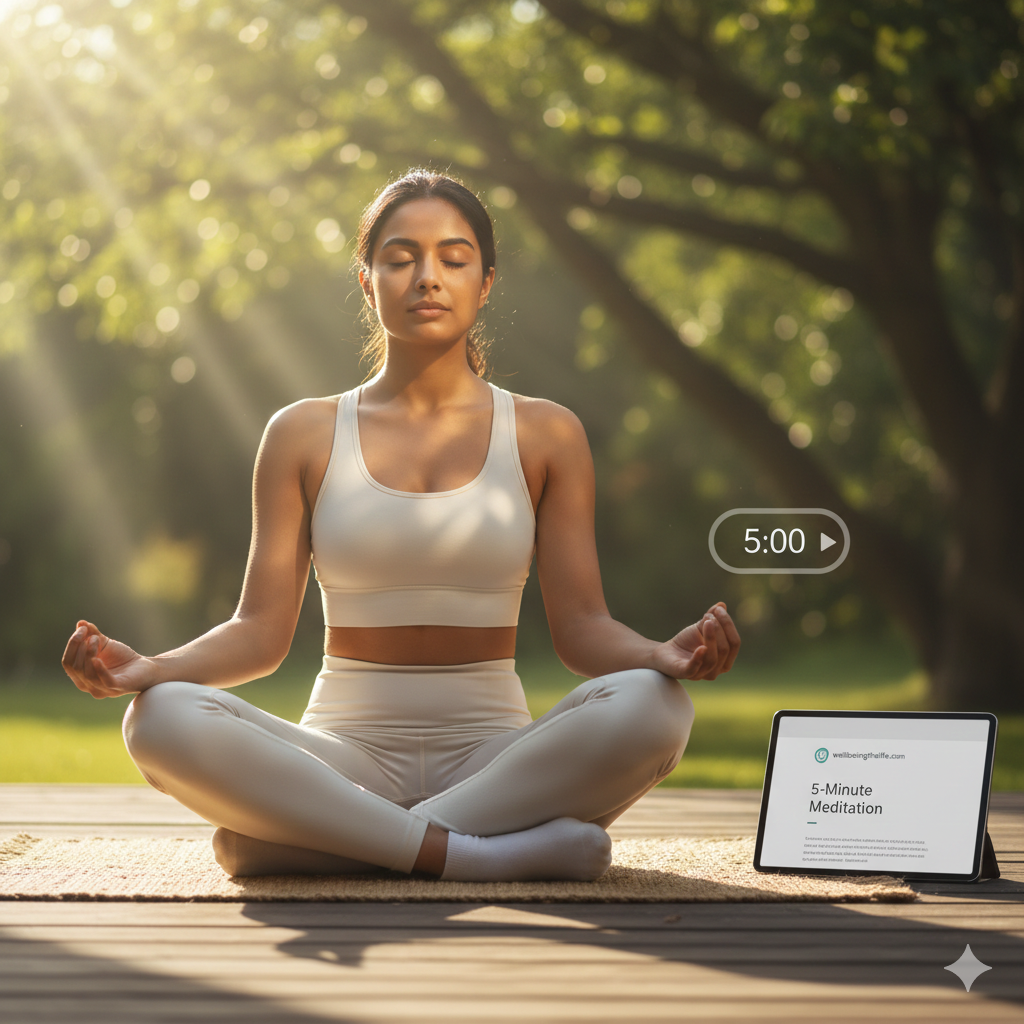
Sit in a comfortable position. You can sit cross-legged on the floor, on a chair with your feet flat, or even lie down. The goal isn’t perfect posture, but ease. Let your hands rest gently on your lap.
Step 3: Close Your Eyes (or Soften Your Gaze) (15 Seconds)
Gently close your eyes, or if that feels uncomfortable, simply soften your gaze towards the floor a few feet in front of you. This reduces sensory input and helps you turn inward.
Step 4: Focus on Your Breath (4 Minutes)
This is the core of your practice.
- Inhale: Notice the sensation of the air entering your body—perhaps through your nose, or the rise of your chest and belly.
- Exhale: Feel the air leaving your body.
- No Judgment: Your mind will wander. That’s completely normal. When you notice your thoughts drifting to your grocery list or yesterday’s meeting, gently bring your attention back to your breath. Don’t criticize yourself; simply observe and return.
- Count (Optional): If your mind is extra busy, try counting your breaths: inhale (one), exhale (two), and so on, up to ten, then start again.
Step 5: Gently Return (30 Seconds)
After five minutes (you can set a gentle timer on your phone), slowly open your eyes. Take a moment to notice your surroundings, how your body feels, and any shifts in your mood. Carry this newfound sense of calm into your day.
Making It a Habit: “Stacking” Your Meditation
To make this stick, try habit stacking. This means attaching your new meditation practice to an existing daily habit.
- Example 1: “After I finish my first cup of coffee, I will meditate for 5 minutes.”
- Example 2: “Before I open my laptop for work, I will meditate for 5 minutes.”
The Takeaway
Meditation isn’t about emptying your mind; it’s about observing it without judgment. Starting with just five minutes can be your gateway to less stress, more focus, and a greater sense of peace in your busy American life. Give it a try – what do you have to lose, besides a little stress?